
Your Body Was Made to Move. Your Health Depends on It.
Why movement is one of our most powerful tools for cancer prevention, and why what you do between workouts may matter more than you think.
Think about your day.
You wake up and sit down for breakfast. You sit in your car or on public transportation. You spend hours at a desk, in meetings, or looking at a screen. You drive home, eat dinner, and settle onto the couch.
Maybe you even squeeze in a workout.
But for much of the day, your body has barely moved.
This is the quiet reality of modern American life. We've created a world where almost everything is designed for convenience, efficiency, and comfort. We can work, shop, socialize, and entertain ourselves without moving very far at all.
But here's what we don't talk about enough: Movement isn't just about burning calories, losing weight, or building muscle. It's part of how our bodies regulate the biological processes that influence cancer risk.
And science is telling us that the movement we do throughout the day deserves just as much attention as the time we spend exercising.
America Has a Sitting Problem
Our bodies are built for movement, but our routines increasingly revolve around chairs, cars, computers, and screens.
A 2025 study published in JAMA, analyzing nationally representative data, found that American adults reported spending an average of approximately six hours a day in sedentary activities during 2021–2023. More than one in three reported at least six hours a day.
That is a significant portion of our waking lives spent sitting, reclining, or otherwise barely moving.
And the issue isn't simply that Americans need more gym memberships.
Our neighborhoods aren't always built for walking. Some communities lack sidewalks, safe parks, accessible recreation spaces, or reliable public transportation. Many jobs demand prolonged sitting, while others leave workers exhausted, with little time for intentional exercise. Caregiving, disability, chronic illness, and financial pressures can all shape a person's ability to move.
In other words, inactivity is not just a personal choice. It is also influenced by the environments we live and work in.
But understanding the barriers shouldn't cause us to overlook the opportunity. Even when we can't change our circumstances overnight, we can begin to rethink how movement fits into our lives.
What Does Movement Have to Do With Cancer?
Cancer develops through complex biological processes involving changes in cells, their growth, and the systems that normally regulate them.
Movement doesn't guarantee that cancer won't develop. Genetics, age, environmental exposures, infections, and other factors also play important roles.
But research consistently shows that people who are more physically active have a lower risk of developing several types of cancer.
Why?
Because physical activity influences some of the same biological pathways involved in cancer development.
1. Movement helps regulate insulin.
Insulin is a hormone that helps your body use blood sugar for energy. But chronically elevated insulin levels and related growth signals may contribute to conditions that encourage certain cancer cells to grow.
Regular movement helps your muscles use glucose and improves insulin sensitivity, helping your body regulate blood sugar more effectively.
2. Movement helps control chronic inflammation.
Inflammation is part of the body's natural defense system. It's how we respond to injury and infection.
But chronic, persistent inflammation can damage tissues and contribute to an environment associated with cancer development.
Regular physical activity can help reduce chronic low-grade inflammation and improve the body's metabolic health.
3. Movement influences hormones.
Hormones such as estrogen play important roles in our bodies. But prolonged exposure to higher levels of certain hormones can contribute to the risk of hormone-sensitive cancers.
Physical activity can influence hormone levels and body fat, which is itself involved in estrogen production, especially after menopause.
This is one reason movement is particularly relevant to research on breast and endometrial cancer.
4. Movement supports immune function.
Your immune system does more than fight colds and infections. It also helps identify and respond to abnormal cells.
Regular physical activity supports healthy immune function. Researchers are continuing to investigate exactly how these immune-related changes contribute to reduced cancer risk.
5. Movement supports digestive health.
Physical activity helps maintain healthy bowel function and can influence how quickly waste moves through the digestive tract.
Researchers believe this may be one of several ways movement contributes to a lower risk of colorectal cancer.
The important takeaway? Movement affects far more than what we see in the mirror. It influences what is happening inside our bodies.
The Cancer Connection Is Bigger Than You Think
The evidence linking physical activity and cancer prevention is particularly strong for breast, colorectal, and endometrial cancers.
Research has also associated greater physical activity with reduced risks of several other cancers.
And these benefits are not simply about weight loss.
Studies have found associations between physical activity and reduced cancer risk even after accounting for body mass index. That means movement may benefit people across a range of body sizes.
You do not need to achieve a particular weight or appearance to benefit from being active.
Your body can benefit from movement long before you notice a physical transformation.
Meet NEAT: The Movement You Didn't Know Had a Name
Here's where the conversation gets interesting.
There is a scientific term for the energy your body uses during activities that aren't formal exercise.
It's called NEAT, short for Non-Exercise Activity Thermogenesis.
NEAT includes the energy you expend while walking around your home, cleaning, gardening, carrying groceries, taking the stairs, or moving around while you work.
Even the seemingly insignificant movements we make throughout the day contribute to NEAT.
Think about the difference between sitting on the couch and putting away laundry. Neither requires athletic clothing, a fitness tracker, or a gym membership. But one involves substantially more movement than the other.
NEAT is not a particular workout. It is the energy expenditure generated by ordinary life.
And those small movements can accumulate.
To be clear, scientists have not established that NEAT itself independently prevents cancer. What we do know is that light-intensity activity, which includes many everyday movements that contribute to NEAT, has been associated with lower cancer risk.
That makes everyday movement an important part of the prevention conversation.
The Surprising Science: More Steps, Lower Cancer Risk
A 2025 study published in the British Journal of Sports Medicine followed more than 85,000 adults in the United Kingdom.
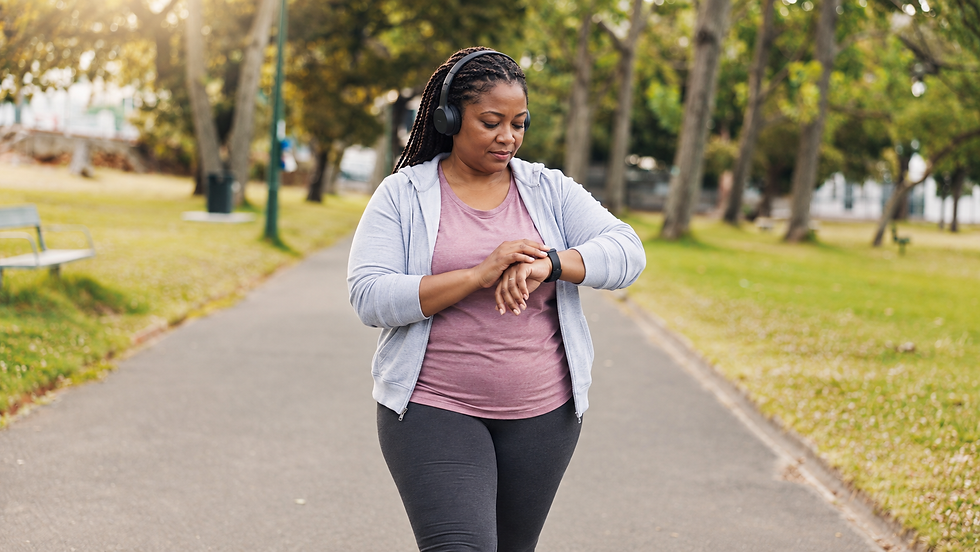
Researchers used wearable activity trackers to measure how much participants moved, including light-intensity activity, and examined their subsequent cancer diagnoses.
The findings were significant.
Compared with participants taking 5,000 steps a day:
Those taking 7,000 steps had an 11% lower risk of developing the group of 13 cancers studied.
Those taking 9,000 steps had a 16% lower risk.
People with the highest overall daily physical activity had a 26% lower risk than those with the lowest activity.
And here's the remarkable part: Once total daily steps were considered, faster walking was not significantly associated with additional cancer risk reduction in this study.
That doesn't mean walking speed never matters. But it suggests that the total amount of everyday movement may be especially important.
The study was observational, so it cannot prove that taking additional steps directly prevented cancer. Still, its findings add to growing evidence that ordinary movement matters.
You don't have to become a runner.
You don't have to train for a marathon.
You can begin by walking more than you do today.
Can You Exercise and Still Be Too Sedentary?
Absolutely.
Imagine someone who spends 45 minutes exercising every morning but sits for most of the next 10 hours.
Now imagine someone who takes a shorter walk, moves throughout the workday, climbs stairs, does household chores, and regularly gets up from their chair.
Both are physically active in different ways.
Structured exercise provides important benefits, particularly for cardiovascular fitness, strength, and metabolic health. But it doesn't mean the hours spent sitting are irrelevant.
Researchers increasingly distinguish between two related behaviors: not getting enough physical activity and spending too much time sedentary.
They're not exactly the same thing.
The evidence linking prolonged sedentary behavior directly to individual cancers is still developing, and the extent to which it independently increases risk varies across studies.
But the broader message is clear: Regular exercise matters, and so does reducing prolonged inactivity.
This isn't an argument against working out. It's an argument for making movement part of the entire day.
Make Movement Part of Your Life, Not Just Your Schedule
The goal isn't to turn every moment into a workout.
It's to stop thinking of movement as something that only happens in a gym.
Walk while taking a phone call. Turn on music and dance while cleaning. Take a short walk after a meal. Stand up and move between meetings. Garden, stretch, play with your children, or make an extra trip across the house.
If you spend much of your day sitting, consider using natural transitions, such as finishing a meeting or television episode, as reminders to get up and move.
If walking isn't possible, movement can include seated exercises, wheelchair propulsion, resistance bands, or other activities suited to your abilities.
The amount and type of movement that's appropriate will look different for everyone. People living with cancer, recovering from surgery, or managing significant health conditions may need an individualized plan developed with their care team.
The point is to find more opportunities to move safely and consistently.
There is also a larger responsibility here. Employers can provide opportunities for movement breaks. Communities can advocate for safe sidewalks, accessible public spaces, and recreation programs. Healthcare providers can help people find realistic ways to be active instead of simply handing them another exercise recommendation.
Cancer prevention shouldn't depend on having a flexible work schedule, an expensive gym membership, or living in the right ZIP code.
Movement Is Powerful. But It Isn't a Guarantee.
One of the most important things to understand about cancer prevention is that reducing risk is not the same as eliminating it.
People who exercise regularly can still develop cancer. People who live sedentary lives will not necessarily develop cancer.
Movement is one part of a broader prevention strategy that includes recommended cancer screenings, avoiding tobacco, limiting alcohol, maintaining a health-supporting diet, and addressing other known risk factors.
No one should feel blamed for a cancer diagnosis because of how much or how little they exercised.
What movement offers is an opportunity to influence some of the biological processes associated with cancer risk.
And that opportunity deserves our attention.
The Bottom Line: Your Body Needs More Than a Workout. It Needs Movement.
For years, we've been told to exercise more.
And that advice still matters.
But perhaps it's time to ask a different question.
Instead of asking only, "Did I work out today?" ask, "How much did I move today?"
Because the walk to the mailbox counts. So does the dance break in your kitchen. The trip up the stairs. The afternoon in the garden. The five minutes you spend moving between meetings.
None of these actions promises to prevent cancer.
But together, they can help create a more active life and support the systems your body relies on to stay healthy.
You don't have to move perfectly. You just have to keep finding ways to move.
And when it comes to protecting your health, every opportunity to move is worth taking.


Comments